

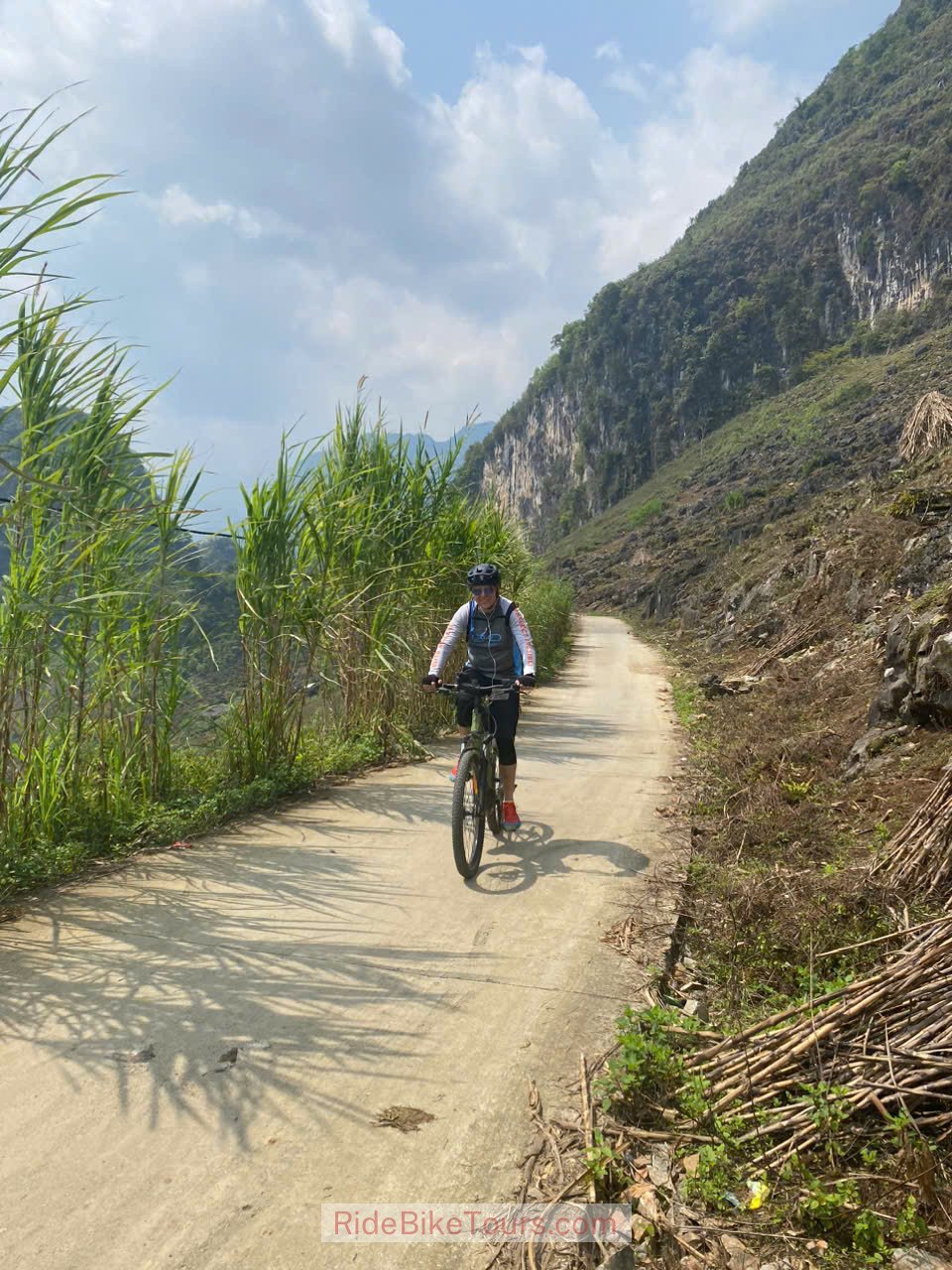

Best Month for Northern Vietnam MTB, Gravel & E-Bike Rides
Discover the Best Month for Northern Vietnam MTB, Gravel & E-Bike Tours! Explore seasonal trail traction, e-bike battery tips, food, stays & top northern routes.
Discover the Best Month for Northern Vietnam MTB, Gravel & E-Bike Tours! Explore seasonal trail traction, e-bike battery tips, food, stays & top northern routes.
Best Month for Northern Vietnam MTB, Gravel & E-Bike Rides
Dawn breaks cold and silver over the jagged limestone skyline of northern Vietnam. At sixteen hundred meters above sea level, ribbons of valley mist curl around your handlebars like cool silk, carrying the sharp, resinous perfume of wild pine needles, damp karst rock, and woodsmoke rising from a hillside Hmong homestead. Beneath your tires, crisp autumn dirt offers textbook traction. Whether your knobby mountain bike treads bite into red-clay singletrack, your wide gravel tires hum across golden terraced embankments, or the silent torque of your mid-drive e-bike motor surges smoothly up a twelve-percent switchback, every sensory detail aligns in effortless harmony. Discovering the Best Month for Northern Vietnam MTB, Gravel & E-Bike Tours unlocks that exact sweet spot where clear azure skies, dry trails, and comfortable mountain air turn every kilometer into pure two-wheeled euphoria.
Northern Vietnam's dramatic topography—spanning towering frontier canyons, primeval bamboo forests, and terraced rice bowls—changes personality dramatically with the calendar. A trail that flows like sculpted velvet in October can transform into slick monsoon clay in July or a mist-shrouded wind tunnel in January. In this complete Best Month for Northern Vietnam MTB, Gravel & E-Bike Rides guide, Vietnam Ride Bike Tours breaks down month-by-month weather patterns, trail traction, e-bike battery performance, regional highlights, and cultural encounters so you can time your off-road, gravel, or electric-assist expedition to perfection.
Pinpointing the Best Month for Northern Vietnam MTB, Gravel & E-Bike Tours
If you ask veteran trail builders, gravel explorers, and local ride leaders to name the single Best Month for Northern Vietnam MTB, Gravel & E-Bike Tours, one month wins nearly every vote: October—closely flanked by late September and November.
During October, northern Vietnam enters its golden autumn window. The summer monsoon retreats southward, leaving behind crisp, low-humidity air and daytime valley temperatures hovering between twenty and twenty-five degrees Celsius. Mountain trails dry out to firm, predictable dirt without turning dusty, paved pass switchbacks grip cleanly under cornering tires, and high-altitude viewpoints across Dong Van Karst Plateau Geopark and Hoang Lien Son Mountain Range clear to reveal horizons stretching for dozens of kilometers. Just as magically, October blankets famous terraced valleys—including Mu Cang Chai, Pu Luong Nature Reserve, and Mai Chau Valley—in shimmering waves of ripe golden rice, filling the mountain breeze with the sweet, nutty aroma of harvest season.
How Northern Vietnam's Seasons Shape MTB, Gravel, and E-Bike Performance
Choosing the right departure window depends not only on sunshine, but also on how temperature, moisture, and elevation affect your specific bicycle discipline. Working with Vietnam Ride Bike Tours ensures your bike setup and route elevation match the exact month you travel.
Autumn (September to November) – Dry Singletrack, Fast Gravel, and Peak Battery Range
Autumn delivers ideal operating conditions across every two-wheeled discipline:
- Mountain Biking Traction: Rooty jungle descents and rocky limestone village tracks inside Pu Luong Nature Reserve and Cao Bang shed summer mud, offering tacky, high-grip dirt where hydraulic disc brakes and suspension forks shine.
- Gravel Riding Speed: Packed dirt farm tracks, river dikes, and sweeping mountain tarmac roll fast and smooth, letting gravel riders link long valley loops with mountain passes without bogging down.
- E-Bike Battery Efficiency: Moderate twenty-degree temperatures keep lithium-ion battery cells operating right inside their peak thermal efficiency zone, maximizing vertical climbing range across consecutive thousand-meter passes.
Spring (March to May) – Wild Mountain Blossoms and Loamy Forest Traction
As winter fog lifts in March and April, northern highlands erupt in pink peach blossoms, white plum orchards, and vibrant green tea plantations. Trail surfaces across Mai Chau Valley and Moc Chau Plateau offer supple, loamy grip ideal for trail riders and gravel explorers, while temperatures remain mild before May's late-spring warmth arrives.
Winter (December to February) – Crisp Climbing Air and High-Altitude Layering
Winter brings cool, invigorating air that prevents overheating on steep climbs. However, high passes above fifteen hundred meters—such as O Quy Ho Pass and Ma Pi Leng Pass—often drop to five to ten degrees Celsius in swirling mist. Cold temperatures can also reduce e-bike battery range by ten to fifteen percent on long climbs, making thermal jerseys, windproof shells, full-finger gloves, and spare mid-day batteries smart additions for winter departures.
Summer (June to August) – Emerald Ridges, Monsoon Mud, and Sunrise Roll-Outs
Summer transforms northern mountains into an electric-emerald sanctuary and swells Ban Gioc Waterfall and Go Lao Waterfall to roaring peak power. Frequent afternoon tropical downpours turn steep dirt singletrack into slippery mud, shifting the advantage toward paved gravel corridors, electric-assist climbs, and early dawn roll-outs that finish before afternoon rain clouds build.
Matching Your Machine and Tour Style to Northern Vietnam's Terrain
Once you lock in your travel month, matching your bike platform and support format elevates every mile across northern Vietnam's diverse corridors.
Technical Mountain and Off-Road Bikes for Limestone Singletrack
For riders drawn to rocky buffalo trails, steep village concrete tracks, and jungle forest paths, high-grade suspension rigs proven across our mountain cycling tours and backcountry offroad cycling tours deliver unbeatable control. Exploring a rugged Pu Luong cycling tour inside Pu Luong Nature Reserve lets mountain bikers weave past giant creaking bamboo waterwheels along Cham Stream and descend shaded jungle singletrack.
Versatile Gravel and Endurance Road Bikes for Valley and Pass Corridors
If your dream ride blends smooth mountain switchbacks with compact dirt agricultural lanes, lightweight frames engineered for our gravel cycling tours and classic road cycling tours cover remarkable ground. Carving quiet borderland roads on a Cao Bang cycling tour over Ma Phuc Pass toward Ban Gioc Waterfall and Nguom Ngao Cave showcases gravel versatility at its finest.
High-Torque E-Bikes for Effortless High-Pass Conquests
Northern Vietnam's legendary passes frequently pitch upward at ten to fourteen percent gradients. High-torque pedal-assist bicycles featured on our e-bikes tours empower riders of varied fitness levels to conquer the towering cliffside balcony of Ma Pi Leng Pass on the Ha Giang Loop or glide effortlessly above Quan Ba Heaven Gate without burning out on steep ramps.
Flexible Formats From Half-Day Loops to Cross-Border Expeditions
Whether you prefer total autonomy on a self-guided cycling tour backed by luggage transfers or lively camaraderie on scheduled group departures, every riding style finds a home here. Leisure riders and children love gentle paddy-field paths on a Mai Chau cycling tour or dedicated family cycling tours. Travelers tight on time can warm up near Hanoi on half-day cycling tours and one-day cycling tours, while ambitious explorers can indulge in five-star resorts on a luxury cycling tour, trace jungle heritage corridors on Ho Chi Minh Trail cycling tours, or cross into Laos and Cambodia on multi-country cycling tours.
Where and What to Eat: Highland Fuel Along Northern Trails
Long days spinning through mountain air burn serious calories, and northern Vietnam rewards hungry cyclists with vibrant, nutrient-dense dishes crafted from fragrant forest herbs, mountain sticky rice, and slow-simmered broths.
At dawn before rolling onto the trail, follow the spiced perfume of star anise, charred ginger, and cinnamon to a bustling roadside noodle shop for a steaming bowl of Pho Bo or Pho Ga (typically 2 to 3.50 USD). Mid-morning trailside feed zones feature crusty, oven-warm Banh Mi stuffed with lemongrass-grilled pork, pickled daikon, cilantro, and chili (1 to 2 USD), paired with sweet highland bananas and chilled electrolyte drinks.
In highland towns across Ha Giang, Cao Bang, Sapa, and Mai Chau Valley, evening recovery banquets showcase Com Lam—fragrant mountain sticky rice slow-roasted inside hollow green bamboo tubes—served alongside charcoal-grilled free-range hill chicken, crispy stream fish, garlic-sauteed wild forest ferns, and warming Au Tau Porridge on crisp autumn evenings (6 to 14 USD per meal). Further south in Ninh Binh and Hoi An Ancient Town, riders celebrate stage finishes with crunchy scorched rice (Com Chay) and chewy Cao Lau noodles. Every afternoon, clink glasses of Ca Phe Sua Da (1.50 to 2.50 USD) as dark-roast Vietnamese coffee drips slowly over sweet condensed milk and ice.
Where to Sleep: Authentic Stilt Houses and Mountain Eco-Lodges
Restorative sleep is essential when chaining together multi-day mountain rides. Across peaceful valleys like Mai Chau Valley—especially inside Lac Village and Pom Coong Village—and Pu Luong Nature Reserve, sleeping in a handcrafted White Thai or Tay wooden stilt house immerses you in timeless rural tranquility (20 to 45 USD per night). You fall asleep beneath crisp cotton netting to the gentle chorus of mountain streams and night crickets, waking to rooster calls and mist drifting through bamboo groves.
In high-altitude hubs such as Dong Van, Meo Vac, Sapa, and Cao Bang, heritage clay-walled Hmong lodges and boutique mountain hotels offer piping-hot showers, early cyclist breakfasts, and secure indoor bicycle storage with wash stations (50 to 115 USD per night). For cyclists seeking elevated indulgence after conquering muddy singletrack or thousand-meter passes, cliffside eco-resorts perched above Pu Luong Nature Reserve, Tam Coc, or Hoang Lien Son Mountain Range feature heated infinity pools, panoramic sunset terraces, and soothing herbal foot baths designed to revive tired legs (140 to 280 USD per night).
Transportation and Logistics: Reaching Remote Trailheads Effortlessly
Smart point-to-point logistics keep your tires spinning on scenic backroads rather than busy industrial highways. Virtually all northern journeys start in Hanoi, where private airport transfers from Noi Bai International Airport bring you directly to your hotel for precision bike fitting, suspension setup, and offline GPS orientation.
Because premier trailheads in Ha Giang, Cao Bang, Sapa, and Pu Luong lie three to six hours outside the capital, Vietnam Ride Bike Tours provides comfortable private support vans—or overnight sleeper trains to Lao Cai—that carry both you and your bicycles directly to quiet mountain trailheads. While you ride light with only a hydration pack or handlebar bag, our support vehicle delivers your main suitcases ahead to your evening lodge and carries spare e-bike batteries, floor pumps, and chilled drinks along key pass checkpoints.
Best Time of Year for Cycling Across Vietnam's Regions
While October shines brightest in the northern mountains, knowing how weather shifts across the rest of the country helps you plan seamless multi-region extensions:
- Northern Mountains (Ha Giang, Cao Bang, Sapa, Pu Luong): Peak riding spans September to November and March to May, delivering dry trails, clear mountain panoramas, and mild daytime warmth.
- Central Coast and Highlands (Hue, Hoi An, Phong Nha, Da Lat): February to August brings warm sunshine and gentle sea breezes along Hai Van Pass and Hoi An Ancient Town, while December to April offers crisp, dry pine-forest riding around Da Lat.
- Southern River Deltas (Mekong Delta): December to April provides dry, sunny weather ideal for cruising shaded fruit-orchard canal paths and village bridges.
Local Culture and Etiquette on Two Wheels
Riding a mountain, gravel, or electric bike through northern Vietnam carries you directly into the ancestral homelands of vibrant ethnic minority communities, including Hmong, Dao, Tay, Giay, Lo Lo, and White Thai villagers. In isolated highland hamlets, schoolchildren run to the roadside beaming with excitement, calling out "Hello!" and stretching out hands for joyful high-fives as your tires roll past.
Practicing thoughtful cultural etiquette enriches every encounter. Dress modestly off the bike when exploring weekly highland markets, and always ask with a warm smile before photographing elders or children. If a local family invites you onto their wooden veranda for hot green tea or a celebratory toast of homemade corn wine (Ruou Ngo), accept the cup with both hands as a gesture of respect—though sip lightly if technical singletrack or a steep descent still awaits! Simple Vietnamese greetings like "Xin chao" (hello) and "Cam on" (thank you) spark instant smiles wherever your wheels roll.
Unmissable Sightseeing Highlights Along Northern Cycling Routes
Balancing exhilarating trail stages with iconic cultural and natural landmarks ensures your expedition delivers lifelong memories:
- Ma Pi Leng Pass and Nho Que River: Carve along a dramatic cliffside balcony suspended high above Tu San Canyon inside Dong Van Karst Plateau Geopark.
- O Quy Ho Pass and Fansipan Peak: Gaze across sea-of-clouds vistas spanning the towering Hoang Lien Son Mountain Range near Sapa.
- Khau Pha Pass and Mu Cang Chai Rice Terraces: Admire centuries-old sculpted golden rice amphitheaters during the autumn harvest window.
- Ban Gioc Waterfall and Nguom Ngao Cave: Cool tired legs beside thunderous turquoise cascades and vast illuminated limestone caverns in Cao Bang.
- Pu Luong Nature Reserve and Cham Stream: Pedal past giant creaking bamboo waterwheels and lush rainforest valleys framed by limestone peaks.
- Mai Chau Valley and Thung Khe Pass: Swoop down misty white-rock switchbacks into a serene emerald basin dotted with White Thai stilt houses.
Frequently Asked Questions About Northern Vietnam MTB, Gravel & E-Bike Timing
What is the single Best Month for Northern Vietnam MTB, Gravel & E-Bike Tours?
Why October offers the ultimate balance of weather, traction, and scenery
October is widely recognized as the single best month overall. Summer rains have ended, trails are dry and grippy, temperatures sit comfortably around twenty to twenty-five degrees Celsius, humidity is low, and golden harvest rice terraces transform valleys like Mu Cang Chai, Pu Luong, and Ha Giang into breathtaking landscapes.
Is spring (March to May) a good alternative to autumn for mountain and gravel biking?
Blooming highland orchards and mild trail conditions
Yes. March and April are fantastic alternatives, offering dry dirt trails, blooming peach and plum blossoms, lush green tea hills, and comfortable daytime riding temperatures before summer heat arrives in late May.
How does winter weather affect e-bike battery range on steep northern passes?
Managing cool summit air between December and February
In December, January, and February, summit temperatures above 1,500 meters can drop to five to ten degrees Celsius, slightly reducing lithium-ion battery efficiency by roughly ten to fifteen percent. Vietnam Ride Bike Tours counters this by carrying warm spare batteries in our support van so e-bike riders never run short on power.
Can I ride mountain or gravel trails in northern Vietnam during summer?
Early morning roll-outs and monsoon-smart route adjustments
Yes, provided you embrace early sunrise starts and flexible routing. While afternoon tropical downpours make steep clay singletrack slippery between June and August, paved mountain passes, compact gravel valley lanes, and waterfall routes remain vibrant and rewarding when ridden in the crisp morning hours.
How far in advance should I book an October or November cycling tour?
Securing peak-season boutique eco-lodges and rental fleets
Because October and November represent peak harvest and riding season across northern Vietnam, we recommend reserving your bikes and accommodations four to eight months in advance—especially if you want high-demand full-suspension mountain bikes, gravel bikes, or electric-assist models.
Time Your Northern Vietnam Cycling Adventure to Perfection
From the tactile crunch of dry autumn singletrack beneath knobby tires to the sweeping golden vistas of Ma Pi Leng Pass, Ban Gioc Waterfall, and Pu Luong Nature Reserve, choosing the Best Month for Northern Vietnam MTB, Gravel & E-Bike Tours elevates every pedal stroke into pure sensory magic. With precision-maintained bicycles, local trail intelligence, and seamless van logistics from Vietnam Ride Bike Tours, you can roll out in peak conditions and experience Southeast Asia's greatest mountain frontier at its absolute finest.
Ready to lock in your ideal departure window? Connect with our local route specialists today to reserve your mountain, gravel, or electric bike and experience our Best Month for Northern Vietnam MTB, Gravel & E-Bike Rides firsthand.
Comments (0)
Leave a Reply
Share your thoughts on this blog post.